Pick an element. Forge its context. Ship the fix.
An agent IDE for mobile developers. Point at the thing on screen, send exactly its context to your coding agent, and ship the edit.
What PickForge does
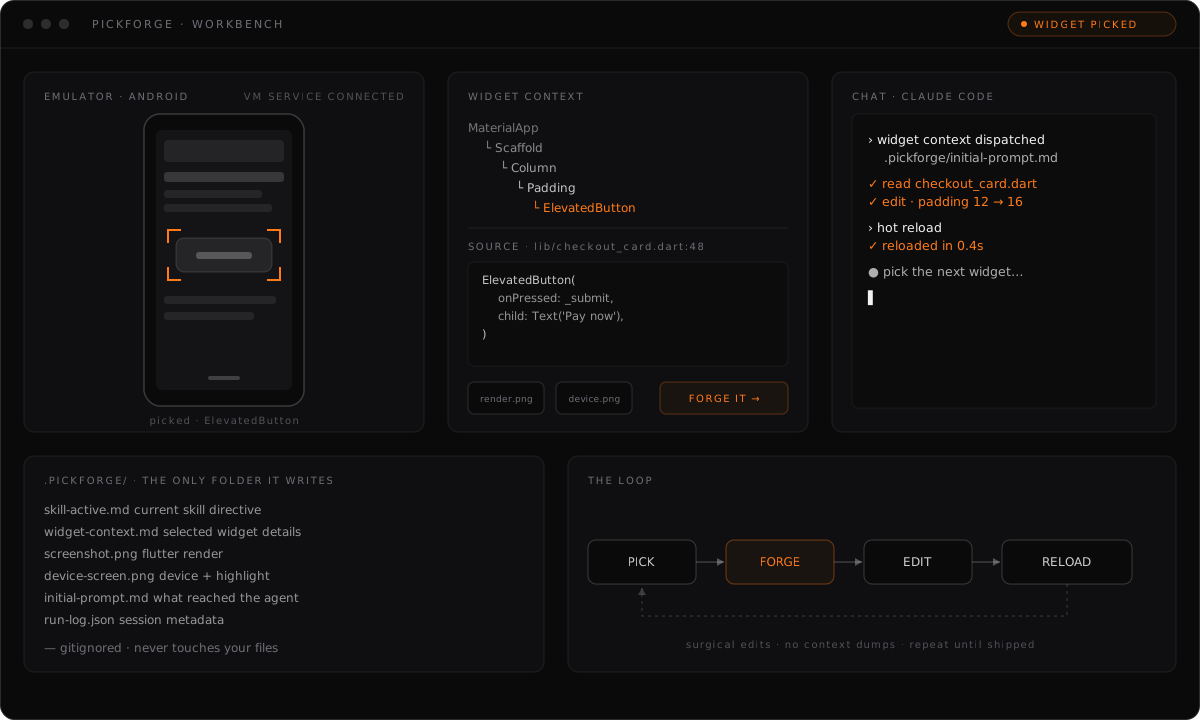
A local desktop app that runs your mobile app, lets you pick the on-screen element you care about, and forges its context (source location or best-effort hints, the ancestor and accessibility chain, screenshots) straight into an AI coding CLI in an embedded terminal. The agent makes a surgical edit. You hot-reload or re-run, then pick the next one.
The pick, forge, edit loop
Pick an element, forge exactly its context to the agent, let it edit, hot-reload, repeat. The agent never gets a context dump. It gets the one element you pointed at.
Bring your own agent
Claude Code, Codex, and OpenCode run in an embedded terminal under your own credentials. Each chat keeps its own scrollback across restarts.
Your source stays put
PickForge never touches your CLAUDE.md or AGENTS.md. The only things that leave are a startup version check and the context you explicitly forge.
Built on Tauri 2
A Rust core behind a Tauri shell with a SolidJS UI and custom window chrome. One small desktop binary, no Electron runtime.
Honest framework support
-
Flutter Deep
Run, hot reload, and exact element-to-source mapping via the Dart VM-service inspector.
-
React Native + native Android Useful
Run, the UIAutomator inspector, logcat, and forge-to-agent with best-effort source hints.
-
Web Experimental
Dev-server run with partial CDP and source-map inspection.
-
iOS Deferred
Tracked with fixtures, not yet wired for a live run. It needs macOS and a product decision.
Get PickForge
.AppImage for Linux, .dmg for macOS, .msi for Windows. Or build from source with Bun and a Rust toolchain.
Local-first. You bring your own agent credentials and your source stays on your machine. The only things that leave are a startup version check against GitHub Releases and the context you explicitly forge into your own agent CLI.
Forge Pass
One subscription unlocks premium across the whole studio, plus cosmetics. Forge Pass is a future paid tier. Everything you see here stays local-first and open source.